

In the second part of ‘Just Vote 1’, Ben looks at the history of optional preferential voting from the 1950s to the 1990s: the role of DLP preferences in keeping Labor out of power, and the Whitlam government’s failed attempt to legislate for OPV in response. Then in the 1980s and 1990s, things began to change – as preferences became more favourable to Labor, the party positions changed.
In the final episode, Ben will look at the rise of One Nation and tactics to encourage voters exhausting their ballots, and look at who optional preferential voting might benefit or hurt today.
This podcast is supported by <a href=”https://www.patreon.com/tallyroom”>the Tally Room’s supporters on Patreon</a>. If you find this podcast worthwhile please consider giving your support.
Buy your ticket now for the Tally Room live podcast in Melbourne on December 1.
You can listen to an ad-free version of this podcast if you sign up via Patreon for $10 (plus GST) or more per month. And $10 donors can now join the Tally Room Discord server.
Welcome to the Tally Room podcast, I’m Ben Raue.
This is the second part of a series looking at the history of optional preferential voting in Australia – Just Vote 1. In today’s episode, I’ll be looking at how DLP preferences flowed strongly against Labor in the 1950s and 1960s, and how Labor responded by pushing for optional preferences in the 1970s and 1980s.
By the 1990s, preferences were no longer something that helped the conservatives, and Labor responded by changing their policy to support full preferences. Just as Labor abandoned OPV, the use of optional preferences in New South Wales and Queensland began to have a bigger impact.
But first, I will be holding my first Tally Room live podcast recording in Melbourne later this year. The show will be recorded at the Punter’s Club in Fitzroy on the Tuesday after the state election, December 1st. I’ll be joined by Emily Foley and Rachel Withers and we’ll be unpacking whatever the hell happened on Saturday night. Tickets are $20 and are now on sale – the link for tickets can be found at the Tally Room website.
The 1954 federal election was very much a two-party affair. The Communist Party polled just over 1%, as did some independents, but over 97% of the vote went to Labor or the Coalition.
But a few months later, things started to unravel within Labor, with federal leader HV Evatt denouncing the influence of BA Santamaria’s Movement and Industrial Groups within the ALP in late 1954. The split formalised at the 1955 federal conference in Hobart, with Movement delegates excluded from the party and going off to form a rival party, then called the Australian Labor Party (Anti-Communist).
The split was very much a state-based affair, and was originally focused entirely in Victoria. The split resulted in a large number of Victorian state MPs, as well as seven Victorian federal MPs, being expelled from the party, and it caused the fall of the Cain Labor state government. The New South Wales Labor government was able to keep internal tensions in check – while the split in Queensland was yet to happen.
At the 1955 federal election, Anti-Communist Labor candidates stood in less than a third of seats – every seat in Victoria, and three seats each in South Australia and Tasmania.
Even at the start, the party that would later become the Democratic Labor Party pursued its most famous strategy – deny preferences to Labor until the party reforms and reunifies with the expelled element.
While it only affected a third of the country, the impact was obvious in those seats. Across 34 seats where the Anti-Communist Labor candidate failed to make the top two, an average of 77% of preferences flowed to the Coalition over Labor.
The breakaway party did show some promise in coming close to winning seats, but failed to win any. Anti-Communist Labor made the top two in five seats, and they gained very strong preference flows. Liberal preferences flowed strongly to them over Labor, and in one seat Labor preferences favoured their former co-partisans over the Liberal Party. They came close in three seats, but missed out.
The ALP (Anti-Communist) showed that they had the potential to do very well out of preference flows – as the nascent Country Party did in 1919 and 1922 – but they just didn’t poll enough primary votes to benefit from those flows. The party did not win a single seat in the House of Representatives throughout its history.
After the 1955 election, the split widened, this time into Queensland.
Labor had ruled Queensland since 1932, but in 1957 the split brought 25 years of Labor rule to an end.
The Premier, Vince Gair, was expelled from the ALP in April 1957 over his support for the Santamaria-aligned Industrial Groups – the same issue that had caused the Victorian split two years earlier. He took a majority of his caucus and almost all of his cabinet with him and formed the Queensland Labor Party. His government limped on briefly before losing confidence and going to an election.
The 1957 Queensland election was conducted using first past the post. Four parties each polled between 20% and 29%, and the results were anything but proportional. The Country Party, who polled fourth-highest, won the most seats. The Liberal Party and the Country Party between them won a majority of seats with 43% of the vote. More than half the vote was cast for either the original ALP or the br eakaway QLP, but they were significantly reduced in strength.
It is fascinating to consider what would have happened if preferences had been used, and they had flowed the way they did at federal elections around that time. I estimate 23 out of 75 seats, almost a third of the state, would have had a different winner.
Labor would have been hit particularly hard, with QLP and Coalition preferences both flowing against Labor. On the other hand, the QLP would have benefited from being the centre party, much like the Country Party did after the First World War. They would have doubled their seat count.
The Coalition parties would have lost some seats, with Labor preferences favouring the QLP over their historic opponents, but they would have also won some seats on preferences from the Labor breakaways. Overall, those preferences would have favoured the Liberal Party more than the Country Party. There still would have been a Liberal-Country coalition government, but with Labor reduced to a rump and the QLP as the main opposition.
This was yet another example of why Labor didn’t like preferences in the 1950s. At a state level, first-past-the-post stunted the success of the breakaway party and saved the Labor rump from a wipe-out.
At a federal level, what was becoming the Democratic Labor Party used preferences as a tool to beat Labor.
In 1958, the Queensland Labor Party contested almost every seat in their state, while the Democratic Labor Party, as they were now called, ran in almost every seat in the other five states. QLP and DLP how-to-vote cards clearly recommended preferences to the Liberal and Country parties over Labor –about three quarters of preferences flowed to the Coalition over Labor when DLP or QLP candidates were knocked out.
And this became the standard for the next decade and a half. The Queensland Labor Party eventually joined the Democratic Labor Party in 1962 – it was a national party but particularly strong in Victoria and Queensland, where the ALP had split. And they kept recommending preferences to the Coalition and away from Labor.
In 1961 and 1969 Labor came close to victory – a weaker DLP preference flow may have flipped those elections, but instead Labor remained out of power for 23 years.
The DLP effect can be seen very clearly in the data.
The Coalition would regularly come from behind on primary votes to win multiple seats at every election in this era. Labor wins from behind remained very rare, with just one such victory in each of 1961 and 1974.
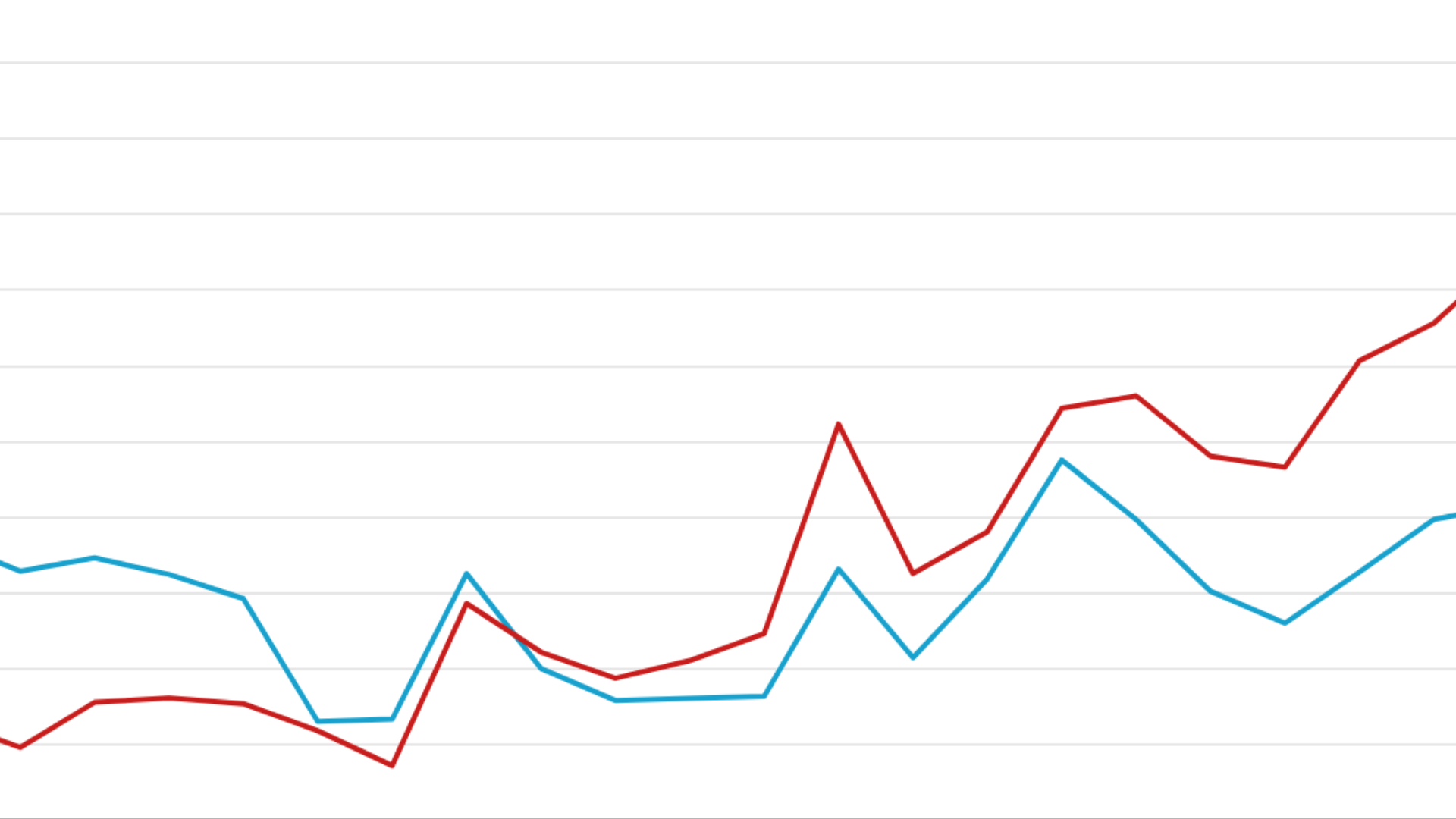
Comparing the major parties’ primary votes to their two-party-preferred vote nationally, preferences clearly favoured the Coalition up until 1972, although the total volume of preferences was much less than has been seen at recent elections.
The DLP’s use of preferences to lock Labor out of power was well known in Australian politics at the time, and it flowed into opposition to the preference system within Labor and amongst their supporters.
A 1973 poll showed that 39% of voters supported first-past-the-post, with another 6% supporting an optional preferential voting system. 51% of Labor supporters favoured first-past-the-post, compared to less than 30% of those who supported the Coalition parties, the DLP or even the left-leaning Australia Party.
At some point during this era, Labor adopted a formal policy at a federal level of supporting first-past-the-post voting. This wasn’t totally new – after all, Queensland Labor had legislated this change in 1942, and New South Wales Labor had tried the same in 1927. But in the 1950s and 1960s, preferences were clearly not a winner for Labor, and political self interest meant they advocated for its abolition.
The ALP’s federal conference dropped support for first-past-the-post voting in 1971, and in 1973 they adopted a policy to advocate for optional preferential voting. It has been hard to find much information about why they made this change – it seems likely that underlying community support for having at least the option to mark preferences made first-past-the-post an increasingly untenable policy, but optional preferences created the potential to achieve some of the same political effects.
While Labor supported a change to the system, the 1974 federal election showed an example of compulsory preferences at their worst, and gave them a pretext to make a change.
The 1974 federal election was just the second double dissolution since the introduction of proportional representation for the Senate in 1949.
With each state electing ten senators on a single ballot, it was very tempting for new contenders to enter the race.
The field was particularly large in New South Wales, where 73 candidates nominated across eighteen groups, and a list of sixteen ungrouped candidates. There were also 40 candidates in Victoria, and 38 in South Australia.
This was a big uptick compared to the last Senate election in 1970. At that election, Victoria had just 25 candidates, and no other state had more than twenty.
This mattered, because voters needed to mark a preference for every candidate on the ballot paper, without mistakes. With a field of 73 candidates in New South Wales, it would be very easy to make a mistake with your numbering and your whole vote is informal.
This surge in candidate numbers did increase the informal vote in five out of six states. There was an informal vote of 12.3% in New South Wales, and in five of six states it was over 10%.
The informal rate had been high in the Senate for a long time. At the first proportional representation election in 1949, New South Wales recorded an informal rate of 12%, with every state except Queensland exceeding 10% – much like in 1974. The rate was again higher in the late 1950s, but 1974 hit a new high.
The 1974 election produced a slim majority for the Whitlam government in the House of Representatives, but the numbers were slightly worse for the Senate.
Labor and the Coalition each won 29 seats, leaving the balance of power in the hands of two crossbenchers, neither of whom were particularly favourable to Labor. And as we know now, conservative state governments in New South Wales and Queensland appointed senators unfavourable to the government to fill Labor seats in the Senate, leaving Labor without a working majority, and ultimately leading to the dismissal of the Whitlam government and the premature 1975 election.
What people probably don’t remember is the close races at that 1974 election. In two states, Labor came very close to winning an extra seat.
In New South Wales, Labor’s sixth candidate Peter Westerway fell about 32,000 votes short of winning, losing to the fifth Liberal candidate Peter Baume. But over 330,000 informal votes were cast.
Meanwhile in Queensland, fifth Labor candidate Mal Colston lost to sixth Coalition candidate Glen Sheil by less than 5,000 votes, compared to almost 66,000 informal votes.
Labor figures at the time blamed the high informal rate for both of these losses, and they were probably right. Evidence over a long period of time pointed to higher levels of informal voting in Labor electorates, with informal voting more common amongst groups that favoured Labor. It is likely that there were enough voters who attempted to vote Labor but failed to vote formally to put Westerway and Colston in front.
And if these results had gone the other way, Labor would have started the new term with a clear majority – and even if those conservative premiers still played havoc with Senate vacancies, the government would have had the numbers to pass its legislation and avoid supply being blocked. It is likely the government would have been able to complete its term and see what fate awaited it after a full term in government.
With this in mind, the Labor government moved on optional preferential voting. Labor had looked to loosen preferencing requirements for at least half a century, and now they tried to act.
The Electoral Laws Amendment Bill of 1974 attempted to make a number of changes to Australian electoral law, many of which would be implemented a decade later: bringing forward the close of voting from 8pm to 6pm, adding party names to the ballot and registering political parties, amongst other reforms. But one of the most prominent and most controversial was a proposal to introduce optional preferential voting for both the House and the Senate.
When the Bill was first introduced, the minister, Fred Daly, claimed that the change would speed up the counting for Senate elections, which had taken a very long time in 1974, but also aimed at “allowing electors the maximum degree of choice in exercising their democratic voting rights.”
“This often means that an elector… is compelled to express a preference for candidates whom he may not know or for whom he has an extreme dislike. Faced with this meaningless, undemocratic requirement, many electors either intentionally or unintentionally disfranchise themselves by failing to correctly mark all necessary squares on the ballot paper.”
The Labor Party was making a pragmatic argument about simplicity and voters making mistakes, but also making a moral argument that voters have the right to not mark preferences for those they dislike or do not know.
The response from the Coalition focused on how optional preferential voting was “tantamount to first-past-the-post”. They insisted that, if voters weren’t required to number every box, many of them would exhaust their votes and preferences would become irrelevant.
Future prime minister John Howard, in his first term in parliament, expressed concern about candidates winning without majority support: “The whole purpose of preferential voting is to be absolutely certain that when all the preferences have been counted, when all the votes have been counted, whoever wins can say that a majority of the people voted for him, either as a first preference or as a second preference.”
The Coalition made no attempt to compromise on the legislation, despite the bill including other provisions that had previously been proposed by the former Coalition government. The legislation was defeated in the Senate without any pretence of amending.
The bill was introduced a second time, with Gough Whitlam speaking in the debate, arguing that “the change involves no derogation from voters’ democratic rights; in fact, it will enhance them.”
The Coalition did amend the bill in the Senate the second time, removing the OPV clauses amongst others. The amended bill was unacceptable to the Labor-controlled House, and the bill died again.
When the Whitlam government was dismissed in November 1975, Malcolm Fraser used a list of 21 bills that had been blocked twice by the Senate as triggers to call another double dissolution. The bill proposing OPV was one of those bills.
Labor may have failed to introduce OPV at a federal level in 1975, but the electoral system achieved its biggest victory later that decade when the Wran Labor government in New South Wales introduced OPV for state elections.
New South Wales had used compulsory preferential voting since 1930. The Wran government had taken power in 1976, and had reformed the Legislative Council in 1978 to be directly elected using proportional representation.
Labor won the subsequent 1978 state election in a landslide, and also won control of the Legislative Council, now with a third of its members directly elected.
In 1979, Wran turned his attention to the Legislative Assembly electoral system, with a bill that proposed to introduce OPV, and to constitutionally entrench the bill. A referendum would be needed to switch the electoral system in the future, but no referendum was needed to make the change in the first place.
Wran argued for OPV as an equity measure that would make it easier to vote, arguing that the existing system “discriminates against the less educated, the migrants, the Aboriginals, the aged and the handicapped”. The bill swept through the parliament despite Opposition cries that OPV was “effectively first past the post”, and was used for the first time at the 1981 state election.
Labor returned to power at the federal level in 1983. While the Whitlam government was fiercely opposed by a conservative majority in the Senate, the balance of power was now held by the Democrats, who were open to reform. Labor had learnt from the experience of 1974, and sought to use the committee system to develop ideas and build support for reform.
The Labor government established the Joint Select Committee on Electoral Reform in 1983. The subsequent inquiry covered many issues. The Labor submission advocated for OPV, but it was clear that there was no parliamentary majority – the Liberals, the Nationals and the Democrats were all fiercely opposed.
While Labor supported OPV for both houses, the urgent issue was the Senate. The informal rate in the Senate remained stubbornly at 9% or above for every election since 1975, and ballot papers continued to grow. If it was still necessary for every preference to be marked, but that requirement was catching out more and more voters, what could be done?
The Australian Electoral Office offered a suggestion – something that was called “the list system” at the time but we now called Group Voting Tickets. Candidates had already been grouped together based on party for many decades – the AEO proposed that each group would lodge a “ticket” with a preference for every candidate on the ballot. A voter would have the choice between numbering every box below the line or just marking a single ‘1’ above the line – something that would have the simplicity of OPV but while avoiding the evil of exhausted votes.
The classic option of voting for every single candidate remained, with some slight tweaks to allow for some votes to count where a small number of mistakes were made – but even those savings provisions were controversial. Anti-OPV politicians were terrified of leaving the door even slightly ajar. There was also a massive asymmetry between the two methods: fill in dozens of boxes correctly, or just mark a single ‘1’. Still, they had a solution.
Preferences would remain compulsory, but in a way that could cope with a ballooning field of Senate candidates. At the 1984 federal election, the Senate informal rate halved, down to just 4.7%. It kept dropping to a low of 2.6% in 1993.
The battle-lines on OPV were clearly drawn in the 1970s and early 1980s: Labor supported freedom of choice, and keeping the voting system simple to minimise informal voting. The Coalition supported ensuring that every box was numbered to avoid exhausted votes and to give winning candidates a majority mandate. Both political positions arose in a context where they were in the self-interest of the parties. Labor had always stood alone, with a single candidate and not many friends on the ballot, while the Coalition sometimes benefited from using preferences to resolve internal tensions, and also benefited from preferences from the DLP.
But by the early 1970s things were beginning to change. 1972 was the last election where the DLP polled a substantial vote share, and the last election where the Coalition had a big lead on preferences.
In 1974 and 1975, the race became far more polarised between Labor and the Coalition. The Coalition still did better out of preferences, but there weren’t many of them available. The DLP’s support had crashed in 1974, while support for the liberal left Australia Party and Liberal Movement – both of whom were precursors to the Democrats, and arguably the Greens and teals – remained steady at just over 3% between them.
Support for minor parties spiked in 1977, with the newly-formed Democrats polling over 9%. Preference flows split about equally between the major parties, and this was about the same in 1980 and 1983.
The 1984 election was the first election to see Labor take the lead in preference flows, and this trend continued.
The story really changed in 1990. Labor had now been in power for seven years, and their prospects for another term did not look good.
The 1990 election was a watershed moment for minor parties and independents. Ted Mack became the first independent to win a seat in the House of Representatives in a generation, and the Democrats reached their high watermark, with 12.6% in the Senate and winning senators in five states.
It was also the debut on the national stage for the Greens – although at this stage there was no single united Australian Greens political party. Instead state-based Green parties contested the election in five states and the ACT, running in sixty seats.
Ballot papers were bigger than they’d ever been before, with 150 more candidates than the previous record in 1984. The average ballot paper had over five candidates.
Labor’s vote crashed to just 39.5% of the primary vote, a swing of 6.5%. This was slightly lower than the vote polled at the devastating landslide defeats of 1966 and 1977. But they didn’t lose. That swing did not flow to the Coalition, who also suffered a 2.4% swing. It went to the independents, the Democrats, the Greens and other parties. And many of those votes came back to Labor as preferences.
Over 10% of all voters cast a vote for a minor party or an independent but preferenced Labor over the Coalition. Just 6.6% of voters gave a preference to the Coalition.
These preference flows saved the Labor government’s skin – the government left with an eight-seat majority and just 49.9% of the two-party-preferred vote.
Credit was given to voters concerned about the environment, and savvy Labor Party operators who made a connection and convinced those voters to give them a preference.
Suddenly, preferences weren’t such a bad thing for Labor. The party changed its policy in 1991 to support compulsory preferential voting. When the ACT was considering a change to its electoral system in the early 1990s, Labor members advocated for single-member electorates with compulsory voting, without success. And in Queensland, the Labor government did not show its former enthusiasm when the state moved to OPV.
The 1989 state election was a watershed moment in Queensland politics. 32 years after the Labor split ended a generation of Labor in power, the time of the National Party came to a close.
Joh Bjelke-Petersen had served as premier for almost two decades, stepping down in 1987. While the Country Party, later renamed the National Party, had governed in coalition with the Liberal Party for most of their 32 years in power, the coalition had split in 1983 and the Nationals had governed alone for six years. Bjelke-Petersen was followed by two short-term premiers, and the party lost in 1989.
Labor won the 1989 election in a landslide, winning 50.3% of the primary vote and winning a 19-seat majority despite rural malapportionment that drew Labor-leaning urban seats with significantly larger populations than seats in the Nationals heartland.
A new Labor government heralded an era of reform, but the process had actually started under the Nationals government. The Fitzgerald inquiry inquired into corruption in the state, and actually commenced while Bjelke-Petersen was still in office in 1987.
In 1989, the Fitzgerald inquiry recommended an Electoral and Administrative Review Commission, amongst other bodies, and that body was legislated in 1989.
Amongst other matters, the EARC performed a review into all elements of the electoral system. This included features of the electoral system that had been skewed to keep the Nationals in power, such as drawing electorates with wildly different populations.
At the 1989 state election, almost 80% of preferences flowed to the Liberal or National over Labor. This partly reflected that the Liberal and National parties ran against each other in almost every seat – more than four fifths of seats had both a Liberal and National candidate. There also wasn’t much of a minor party presence – the Democrats and Greens each ran just seven candidates and no minor party polled over half of a percent.
So the EARC had a wide remit to review the electoral system, and they did exactly that. They seriously considered optional or compulsory preferential voting, receiving a large amount of evidence from the public.
All three major parties supported compulsory preferential voting – even Labor, who may have still seen an advantage in OPV at a state level, while beginning to see the downsides at a federal level. But a wide range of other advocates recommended OPV, for a lot of the reasons we’ve seen before – simplicity, freedom of choice, and making it easier to cast a vote.
In the end the EARC recommended a switch to optional preferential voting, seemingly on the basis of voters having the right to not mark preferences they do not genuinely believe in.
The Commission was “concerned that electors are currently required to record views they may not have”, and that voters may have “either to invent preferences, or arbitrarily assign rankings to candidates about whom they know nothing and care less or accept that their ballot-paper will be excluded”.
The Commission supported compulsory voting but argued that having required voters to cast a ballot, “it is inappropriate for the electoral system to corrall votes on behalf of candidates or parties who electors do not wish to support”.
The Commission also referenced the experience of OPV in New South Wales, which had now been using the system for a decade. They took the example of some voters choosing to “just vote 1” as evidence that under CPV “voters are being required to express views they may not have”.
The premier, Wayne Goss, responded to this recommendation by agreeing to legislate for OPV, but he wasn’t enthusiastic about it. He predicted that Labor would see some disadvantage from losing Green or independent preferences. Meanwhile the state director of the National Party focused on the need for the National and Liberal parties to cooperate more closely to avoid the system slipping into de facto first past the post, which he said would benefit Labor.
Despite some who urged the Liberal and National parties to work together, the two parties entered the 1992 election completely separately – about two thirds of seats had both a Liberal and National candidate, with the parties competing to see who would be the bigger conservative party on the new electoral boundaries.
Labor won 54 seats again, as they had in 1989. A majority of preferences still flowed to the conservatives, with about 20% of preferences exhausting. Voters were still used to marking preferences, and they did so.
At the 1995 election, the National and Liberal parties learnt from their experience and mostly avoided running in the same seats. Meanwhile there was a fight brewing on the left, where the Greens were emerging as a challenge to Labor. Queensland Greens founder Drew Hutton in particular saw preference allocation as a way to punish Labor governments in Brisbane and Canberra for poor performance on the environment.
Such threats were made at a federal level, but the Greens came to find that they didn’t have much bargaining power under a compulsory preferential voting system where most of their voters would preference Labor anyway. But in Queensland, OPV gave the party the option of recommending no preference at all – a much more viable threat.
The Queensland Greens ended up deciding not to recommend preferences to Labor in 1995, but in five seats actually recommended preferences to the Coalition.
The 1995 election ended up being extremely close – Labor won a slim one-seat majority. This majority was later overturned when the result in the seat of Mundingburra was thrown out – the Liberal Party eventually won the seat at a 1996 by-election, and independent Liz Cunningham ended up backing a Coalition government to take office mid-term.
But before that change in government, there was talk about abolishing optional preferential voting – the Coalition was eager for the change, with National leader Rob Borbidge saying that OPV “can effectively be a first-past-the-post system”. Labor was less certain, but showed an openness to ending OPV.
Despite Labor’s frustration with the Greens, that didn’t show up much in the preference flows. The ending of National-Liberal contests did lead to a lot less preferences being available to flow on the right, but still the proportion of preferences flowing to Labor increased significantly.
That move to abolish OPV did not go ahead. The Coalition was back in power in Queensland, but perhaps not for long – an independent named Pauline Hanson was forming a political party called One Nation, who would have a big impact on the next two Queensland elections.
That’s it for episode two of “Just Vote 1”. In next week’s final episode, I’ll look at how the rise of One Nation led to parties encouraging voters to “just vote 1” – initially parties of the left. One Nation’s collapse and the rise of the Greens led to the conservative parties advocating for OPV. The story finishes in the current day, looking at how optional or compulsory preferences play out in today’s fragmented party system. It’s no longer so easy to tell who benefits from votes exhausting. As Queensland considers a switch back to OPV, it’s hard to say whether it would actually be in the interests of the Queensland government to make such a change.
You can find this podcast on your podcast app of choice. If you like the show, please consider rating or reviewing us on Apple Podcasts or Spotify. You can follow me on Bluesky at www.benraue.com. You can now also follow the Tally Room on Instagram, TikTok and YouTube at @thetallyroom.
This podcast is made possible thanks to the generous support of our donors on Patreon. Sign up at patreon.com/tallyroom.
Ad-free versions of this podcast are now available for Patreon subscribers. And if you sign up for $10 or more per month you can join our Discord, where we’re having great conversations about elections.
If you’re a Tally Room member, you can also access election guides for the next federal election and state elections in New South Wales and Queensland.
Information about this podcast is available at tallyroom.com.au, and you can email questions or feedback to podcast@tallyroom.com.au. Thanks to Chris Dubrow for writing the music you hear in this episode.
Once again, thanks for listening!