

DemosAU has now published four MRP polls over the last year – the very large polls that involve projecting the result in every seat. DemosAU is one of two pollsters publishing regular MRPs, along with Redbridge. These MRPs are useful for giving us a sense of how voting distributions suggest how a national vote count (which is regularly reported by numerous pollsters) may break down into seats.
The latest poll was published earlier this week, and showed a slight change in the primary vote, but a very big change in the seat counts. For this blog post, I am going to explore what changed between those two polls, and what it tells us about the mechanics of our electoral system.
First, let’s look at the topline figures. One Nation’s primary vote dropped by four points, from 30% to 26%. Labor and the Coalition both increased their support by just 1%, while the ‘others’ vote increased by two points.
Next up, let’s look at a summary of the most likely winners across all 150 seats (although DemosAU also provides ranges of outcomes).
The first post-election MRP, conducted in October-November 2025, showed Labor steady on just under 100 seats. The last MRP, however, had Labor on just 68 seats – probably enough to scrape together a majority, but only just ahead of One Nation on 60 seats.
Labor’s seat count is now back in the 80s, while One Nation has crashed into third place with just 24 seats. Despite outpolling the Coalition on primary votes, One Nation ends up winning fewer seats.
This grabbed my attention, because I have been saying for a while now that One Nation would need to significantly outpoll the Coalition to win more seats. I have argued that if the two parties are close to neck-and-neck, like they were in South Australia, the Coalition would win more seats. And that is exactly what this poll has shown. For the rest of this post, I want to explore why this is happening.
Let’s start by looking at who makes the top two in the 150 seats. You can’t win a seat under our single-member electoral system unless you make the top two. When the race for second and third is close, it can make a big difference as to who wins. We have seen on the left that the Greens’ chances of victory are much greater when Labor drops to third – and now the mirror image is appearing on the right, with One Nation’s chances of victory dropping away if the Coalition makes the top two.
The top two changed in 28 seats (almost a fifth of the country). Labor-One Nation contests remain the most common type of contest, but have dropped from 97 seats in February-March to just 74 in August-September. There are significantly more Labor-Coalition contests, and also more Coalition-One Nation contests.
By my count, One Nation lost twelve seats because of a change in the top two. In six seats, One Nation won the seat in the May-July poll but now fell into third place – five of those seats went to the Coalition and one went to Labor. There was a further six where One Nation stayed in the top two but their main rival changed from Labor or an independent to the Coalition, and in all of these seats the Coalition won.
Those twelve seats make up just over a third of One Nation’s losses compared to May-July.
One Nation lost a further 22 seats where there was no change in the top two – 15 to Labor and 7 to the Coalition.
The next question is the impact of preference flows on the results. This next chart shows the proportion of all other votes that flowed to each top-two party in each seat. Results are grouped based on who the top two were. In brackets shows how many seats were in that category for each MRP.
The numbers are fairly steady, although One Nation has been doing relatively worse over time, against either the Coalition or Labor. Labor has been losing ground to both the Coalition and the Greens.
The most recent DemosAU poll report explains the logic of their preference flows. In short, it is a combination of past election data and respondent preferences.
I was mildly critical of the first MRP in 2025 for using overly generous preference flows for One Nation, and it does look like flows to One Nation have weakened in subsequent MRPs. Comparing these figures to South Australian election results suggests they are roughly right. Kevin Bonham has suggested that the expected flow of preferences from the Coalition to One Nation is too weak. Based on the experience of South Australia and Farrer, I think it is probably about right, but could be slightly low once you consider that these voters haven’t been offered a how-to-vote that will likely recommend Liberal preferences to One Nation.
As you can see from the above table, One Nation do not win a majority of preferences against either the Coalition or Labor. Labor has a slight lead, and that would vary from seat to seat depending on the make-up of the other minor candidates (in particular the relative balance of Coalition and Greens voters), while the Coalition defeats One Nation comfortably.
This preference deficit can be seen in how One Nation performs in seats where they come first on the primary vote. One Nation came first or equal-first in 52 seats on this week’s DemosAU MRP, yet they only win 24 of them. Labor wins eleven, and the Coalition picks up seventeen. That is half of the total Coalition wins, achieved on preferences against One Nation.
Another point worth making is the closeness of many of these races. The “winner” polled just 50% of the 2CP in nine seats, and Labor won six of those seats. This does seem quite lucky, and it wouldn’t take much for Labor to have won a lot less than the 84 that the MRP projects as the most likely outcome.
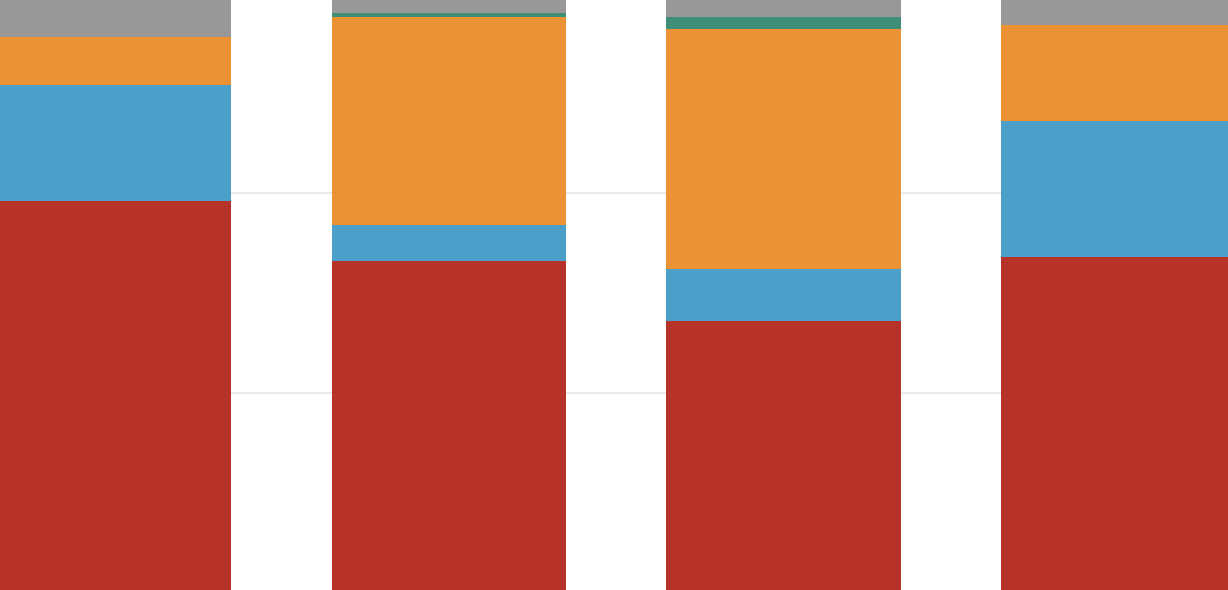
DemosAU split seats into “in doubt”, “lean” and “firm” based on the winning candidate’s margin, and this next chart shows how many seats are in each of these categories based on the top two and the winner.
Overall, the “in doubt” races between Labor and One Nation split about evenly. Labor has a lot more safe seats, which reflects the deep split internally within the right which isn’t replicated on the left.
Most Coalition-One Nation seats are marginal in one way or another.
Overall, One Nation’s support has dropped somewhat since the middle of the year, and this poll shows the consequences of such a drop.
A slight swing back to the left has put Labor on more solid ground, but their majority is not very solid. I estimate that a swing of less than 2% would put Labor in minority.
If you were to look for a right-wing majority including the Coalition, One Nation, Bob Katter and Dai Le, Labor would need to lose all the seats on 50% and 51%, and just two seats on 52%. That’s not much of a shift.
Within the right, the Coalition has a big advantage if they make the top two, and One Nation’s seat gains rely on beating the Coalition by enough of a margin to push them out of the top two in most seats. If One Nation and the Coalition are competitive on the 2CP, the Coalition will win in most cases.
These MRPs are very useful, but they should be seen as a reflection of the current state of play, not a prediction of an election result. And comparing multiple MRPs over the year shows very clearly that small shifts in the vote can swing a lot of seats. Under our fragmented electoral system, a lot more seats could be in play at the next election.