Nominations have now closed for the Victorian state election. I will have the final candidate lists up later tonight, but we now have enough data to analyse the candidate nominations overall.
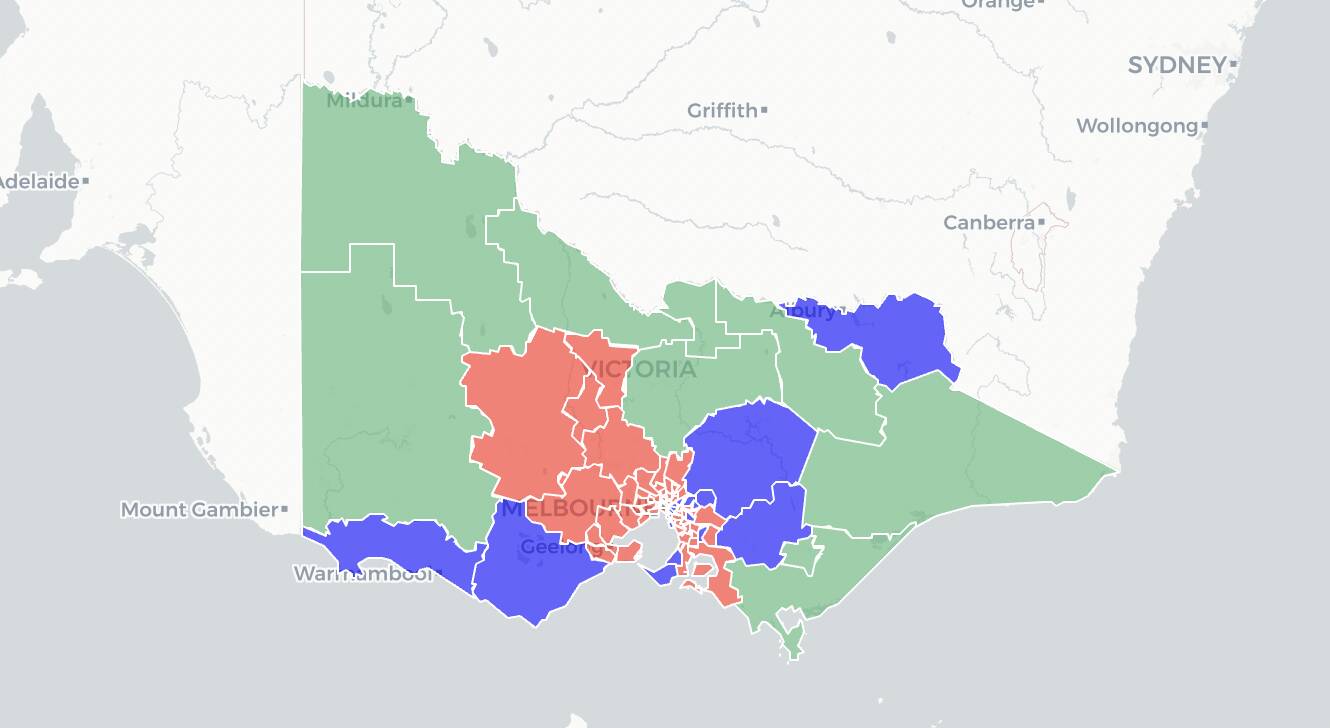
The most interesting story is in the Legislative Council. Those of us who have been urging the abolition of group voting tickets have argued that it encourages a proliferation of a large number of parties, and incentivises those parties to run full statewide tickets. We are now already seeing strong evidence that ballot papers will be much smaller under the new system.
Just 303 candidates have nominated for the upper house, down from 454 in 2022. But more meaningfully, there are fewer groups in each region. In 2022, the same 22 parties nominated in every region, plus two extra independent groups in Western Metropolitan. This time, a smaller number of parties have nominated everywhere. Other parties have picked their battles more strategically.
Overall 18 parties (counting the Coalition as a single party, as they always run together in the upper house) have nominated, plus seven independent groups.
Each region has between 11 and 15 groups. Western Victoria has the biggest ballot paper, while the others have 11-13 each. These ballot papers are smaller than those seen at the 2014, 2018 or 2022 election. You have to go back to 2010 to find smaller ballots.
Bearing in mind that voters will be asked to number at least 5 boxes above the line, those five boxes would cover 33-45% of all groups on the ballot paper, a much higher proportion than the 22% that would have been covered on most of the 2022 ballot papers. We have seen from the Senate that smaller ballot papers have meant votes last further into the count and the number of exhausted votes is reduced. It turns out removing perverse incentives makes it easier to cast a vote, and thus makes exhaustion a minor issue.
Eight parties have nominated a full ticket: Labor, the Coalition, One Nation, the Greens, the DLP, Legalise Cannabis, Victorian Socialists and Sustainable Australia.
Family First and the Australian Democrats have each nominated in six regions.
The Libertarian Party and the Shooters, Fishers and Farmers have nominated in three each.
Interestingly Animal Justice has only nominated in two regions, neither of them in the Melbourne urban area.
Unfortunately the Legislative Assembly ballot papers are barely any smaller than in 2022, when the previous record was smashed. 740 candidates nominated for the Assembly in 2022, whereas previous fields had usually been in the low 500s. This time the number is 734 – just six fewer than last time.
The number of candidates per seat peaks at 15 in Footscray and 13 in Prahran, while only five have nominated for Sandringham. There are 17 seats with ten or more candidates.
A bunch of parties joined the race at the last minute. Of the most interest are three parties founded by far-right campaigner Avi Yemeni with the intention of harvesting preferences in the Legislative Council under the old electoral system: “I’m Voting to Avoid the Fine”, “Free Palestine” and “Climate Action Now”.
These three parties are running 13 candidates between them, with their candidates concentrated in inner-city electorates with high Greens votes: Footscray, Northcote, Pascoe Vale, Prahran and Preston. That’s 13 candidates across five seats.
It’s not clear what their strategy would be: if a voter casts a ballot for one of these parties, they would presumably then continue voting in their normal intentions. It is hard to see those parties putting on a big how-to-vote effort.
Labor, the Greens, One Nation, Victorian Socialists and the Coalition are all running a full ticket, with Liberals and Nationals running against each other only in the seat of Ripon. Family First are running in 71 seats, with Animal Justice in 40.
The number of independents has shrunk to 86, down from 120 in 2022 and 102 in 2018.
That’s it for now. I will be adding websites for upper house candidates later tonight as well as the ballot order for lower house candidates, then will post the final lists on the election guide as soon as possible.