

I’ve done a number of radio interviews this morning and people want to understand how it is possible that the Greens, polling 14.5%, are winning more seats than Labor, on 18.2%, or One Nation on 20.3%.
So for today’s post, I wanted to explore why the results for One Nation have been so poor despite polling so well, and why the Greens have seen such a strong result. Of course there are numerous seats yet to be called, but the general shape of the election is now clear.
The first thing to note is that a single member electoral system is not proportional, and not designed to be fair. We happened on this system by accident, and arguments in favour of keeping it largely centre around its tendency to produce a single-party government, which it has done this time, thanks to the tendency to give a ‘winners bonus’ to the leading party. Preferential voting does nothing to diminish this tendency. Indeed this result would have looked more proportional under first past the post than under our current system.
I will return to the case for proportional representation, in particular for voters on the right, in a future post.
The first part of the story is the distribution of the votes for each of the four main parties. This chart shows the number of seats where each of these groups has a particular primary vote.
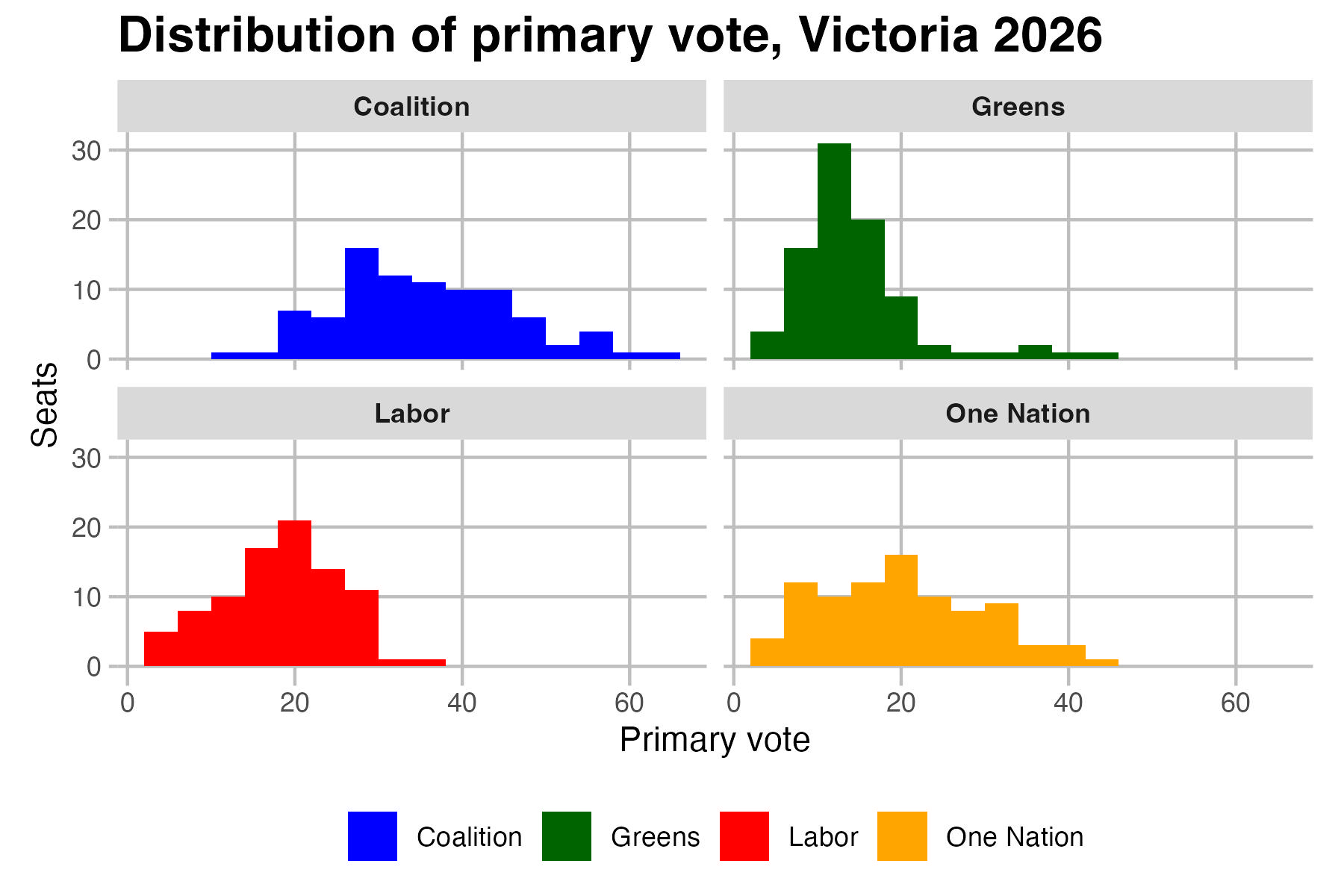
The Coalition vote is spread out fairly widely, but One Nation and Labor also have a reasonably wide spread.
The Greens have a very different structure to One Nation – their best seats are similar to the best One Nation seats, but there are less of them. So they can hit the 40s in some seats even though their primary vote is lower.
If the Greens polled the same as they did, but had a shape of results closer to Labor or One Nation, they would have likely won fewer seats.
But it’s not just about each party’s vote, but also about the other parties’ votes. Part of the story here is about the Greens’ ability to get ahead of Labor, and One Nation’s ability to get ahead of the Coalition.
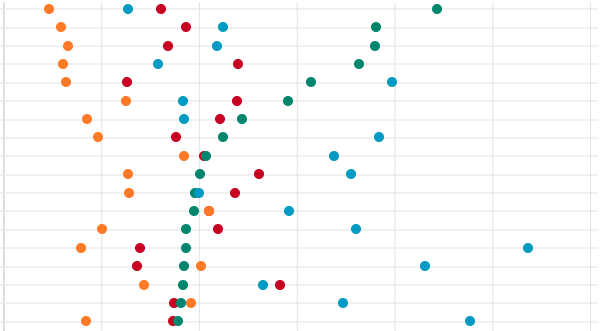
This chart shows the Greens’ 30 best seats, and the primary vote for the four main parties.
First thing to notice is that the shape of One Nation results is fairly smooth, gradually increasing. There is a big increase in their four best seats but it’s not as dramatic as we’ll see for the Greens.
The other thing to notice is that the Coalition is ahead of One Nation in most of these seats. The best chance for One Nation to gain preferences is from the Coalition, and there aren’t many seats here where they could gain those preferences.
Compare that chart to the same for the Greens’ 30 best seats.
There is a much more dramatic increase in primary vote in their six best seats, five of which they have clearly won. They also were the top-polling party in most of these seats, with the opposing vote fragmented between the three main parties and the Victorian Socialists.
Obviously the size of the Greens primary vote is a factor in whether they win a seat, but it is also whether the Coalition are ahead of them or behind. They are struggling in Prahran and Albert Park, and probably won’t win in Geelong or Oakleigh, but they are winning in Preston.
The final thing to note is the preference flows. These numbers are taken from the Poll Bludger results site, and amalgamate all preferences from candidates outside the two chosen for the VEC on election night.
Half the state was a Labor-Liberal contest on election night. In recent elections, preferences in these seats have favoured Labor, but with a growing One Nation vote they basically split 50-50. That is also the case for Labor-One Nation races.
In races between One Nation and the Coalition, the Coalition gain over 81% of preferences. It is eerily similar for both the Liberal and National parties.
In Labor-Greens races, the Greens gained almost two thirds of preferences, despite the Liberal Party recommending preferences to Labor. Some of this would be due to Victorian Socialists voters, but it will be fascinating to analyse this further.
At the moment we have only one seat showing a Liberal-Green count, and the Greens have almost a third of preferences there. That seems a bit weak, and probably reflects One Nation tilting that preference pool to the right, but potentially also showing the effect of Labor issuing an open ticket in Prahran. We will get a lot more Liberal-Greens data once the 2CP rethrows are conducted, which starts today.