

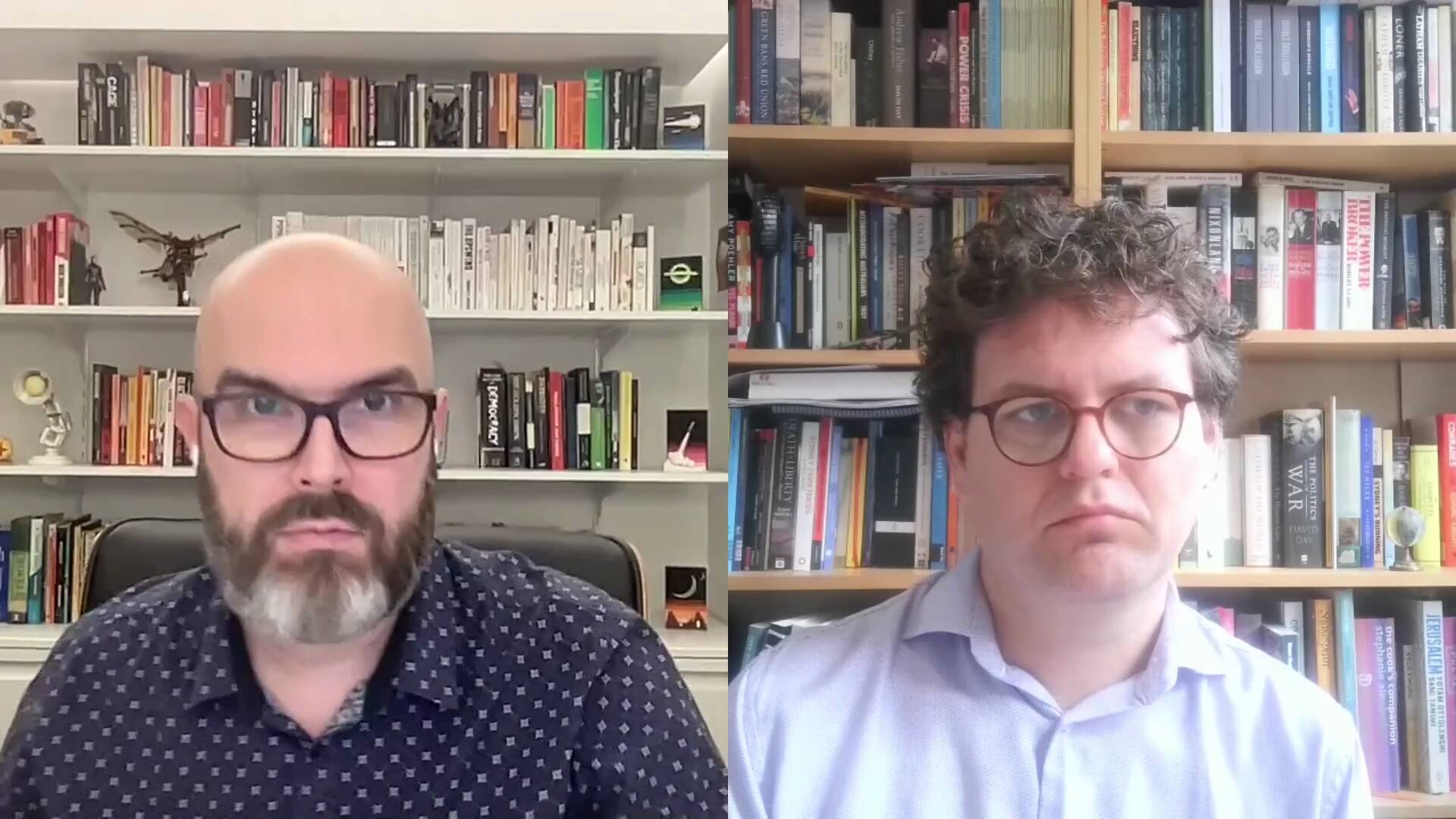
Ben was joined by Mark Riboldi from UTS to preview this weekend’s Farrer by-election, and what it might imply about the Coalition’s bigger issues losing support to One Nation and independents.
This podcast is supported by the Tally Room’s supporters on Patreon. If you find this podcast worthwhile please consider giving your support.
You can listen to an ad-free version of this podcast if you sign up via Patreon for $8 (plus GST) or more per month. And $8 donors can now join the Tally Room Discord server.
You can subscribe to this podcast using this RSS feed in your podcast app of choice, but should also be able to find this podcast by searching for “the Tally Room”. If you like the show please considering rating and reviewing us on iTunes.
Ben: Welcome to the Tally Room podcast. I’m Ben Raue.
This weekend’s federal by-election for the seat of Farrer is the most highly anticipated by-election we’ve had for quite some time in Australia. As One Nation surges in support across regional Australia, this Liberal seat is the perfect test case for their ability to turn polling into results. My guest today is Mark Riboldi. Mark is a political sociologist at the University of Technology, Sydney. Hello, Mark.
Mark: Hi Ben.
Ben: So Farrer is a vast seat in southwestern New South Wales, stretching from Albury west all the way to the South Australian border. The seat was won in 2001 by the Liberal Party’s Sussan Ley, defeating her National Party rival by barely 200 votes. But in the absence of a Nationals challenge, the seat has been fairly safe for Ley for most of her tenure. Lee did face a serious challenge by independent Michelle Milthorpe in 2025, winning by a 6.2 % margin.
Mark, the government won’t be changed by this by-election, indeed Labor isn’t even standing, so does this by-election really matter?
Mark: In terms of who forms government now and even for the outcome of the next federal election, probably this by-election doesn’t really matter. However, the Farrer by-election matters for, I think, two important reasons. First, we’re seeing a primary contest between two non-major party candidates, independent Michelle Milthorpe and One Nation’s David Farley, in a seat that has never not been held by the Liberal-National Coalition. And that’s not politics as usual in Australia.
And second, I think this by-election matters because it’s at the heart of a big question at Australian politics at the moment. If the Australian Labor Party is the government, who is the opposition? The LNP have been eroding votes and seats from their left and right for over a decade now, to independents and now one nation. The Liberal Party in particular are in a fight for their survival and whoever wins this by-election will send a really strong signal to the Liberal Party about where they are in that fight.
Ben: Well, maybe we can start by going through who the candidates are. There’s probably four worth mentioning. The ones that we think either have a chance of winning or parties that have held the seat in the past. Raissa Butkowski, she’s running for the Liberal Party. Obviously, they’re the incumbent. They’ve held the seat before and it would be a big blow for them if they were to lose the seat.
Mark: Yeah, I think, interestingly, Raissa Butkowski looks like she could be a Climate 200 backed independent candidate, she could be a Greens candidate, y’know, she’s a local lawyer, she works at the local community legal centre. So I think in terms of that contest of where the Liberal Party’s head at, that this is kind of a signal towards their left flank in terms of who they’re picking as their candidate.
Ben: And then we have One Nation’s David Farley. Now One Nation has always done okay relative to their national support in Farrer. Farley, the story has come out recently, apparently has previous links to the Labor Party. He was with the Australian Agricultural Company, so he’s a farmer. He’s got all those kind of agricultural links as well. And there’s been a bit of reporting in last few days kind of going, oh, you know, how loyal is he to One Nation?
Will he stick with the party? The funny thing about that, I think, is like, I’m not sure the voters, even the One Nation voters particularly care about that. Like,
Do they care about party discipline of One Nation sticking together? I think they probably just care about sticking to the major parties, but like if he gets elected and he becomes an independent, I’m not sure those voters will be that upset. But I think it’s probably a bit premature to kind of determine that he’s already on his way out of the party.
Mark: Yeah I agree. I think Farley in a way looks like a regional independent. He looks like someone who’s kind of been shopping around for a political vehicle in order to get elected. I’d say there’s a pretty good chance that, If he gets elected, he won’t be a One Nation MP by the time of the next federal election.
To me looks like a, you know, that kind of regional independent like a Joe McGirr, Helen Dalton, Roy Butler in the New South Wales Parliament. Y’know, Dalton and Butler were elected on a party vehicle for the Shooters, Fishers and Farmers and then they didn’t last until the next election. I’m not a betting man, but I would put money on David Farley if he gets elected, not being in One Nation for very long.
Ben: You mentioned Helen Dalton. She is one of the state MPs who covers this electorate, particularly covers the non-Albury, more rural areas to the west. And there was speculation for a bit that she would run as an independent or that she would even run as a One Nation candidate, which didn’t quite seem to fit. But I think it does reflect how One Nation has been kind of, as their vote has been surging, they’ve been looking a little bit further afield for candidates who maybe have a bit more credibility, but maybe are a bit more ideologically flexible compared to where the party has been before.
And then we have Michelle Milthorpe. She stood last time. She’s one of those rural independents. She’s had, you know, support from the kind of groups that support independents now. She did, respectably last time. I think she got about 20% of the primary vote, got to 43.8% after preferences. And her vote, unsurprisingly, is strongest around Albury.
You know, at least on the election day booths, she won all the booths in Albury herself on the two candidate preferred vote over Sussan Ley, whereas Ley was generally winning the Booths further west in more rural areas. And probably the picture would be a little bit less favorable to Milthorpe if you include like postal votes and pre-poll votes cast in those areas. But she definitely is strongest in Albury.
One thing about her that I’ve been fascinated by is people talking about her being a teal or not. You get pushback if you describe her that way. I think the term teal sometimes has value. It has value I think when you’re talking about generic support for these independents in urban areas. You know, when I say all the teal areas on the north shore or something, but I think there’s a reason we stick to the word independent because particularly in the rural areas, they don’t all fit the same mold.
And I think supporters of Milthorpe would say a much better comparison would be the independents who’ve held Indi. Helen Haines, Cathy McGowan before her. And it’s worth remembering that the biggest town in Indi is Wodonga, the biggest town in Farrer is Albury and Albury and Wodonga are basically the one city so my understanding is lot of Helen Haines volunteers have been helping out with Milthorpe’s campaign.
One element with that which I’ve been really fascinated by, I’m interested in your thoughts on this, there’s been a bit of a campaign on the right to try and make it out to be some kind of scandal, some kind of untoward activity that Milthorpe’s campaign is using the color orange, which is also what One Nation is using, that they’re not using the colour teal, that’s somehow misleading. But like, lots of people use orange and independents have been using orange for a really long time.
Mark: Yeah, absolutely. I don’t think it’s particularly a scandal there. I agree with you about the teal categorisation and how Milthorpe has been, I think, trying to distance herself from Climate 200 generally. I generally prefer to talk about these independents as Climate 200 backed independents rather than teals, which is generally used as a pejorative. I don’t think that they refer to themselves as teals. I see Milthorpe as a bit closer to rather than those kind of inner urban independents, someone like Caz Heise who ran for Cowper a couple of times was not successful. So I think this is a really good test for can independent candidates backed by Climate 200 win outside of those inner urban metropolitan areas.
Ben: Well, there’s a bunch of these rural independents who ran in 2022 and then ran again in 2025. And to be honest, they’d come close in ’22 and they didn’t really make any further progress in ’25. And I think it does partly show that a competent, well-run independent campaign can overtake the Labor Party and do respectably, but getting those last couple of percentage points to win is really difficult, particularly once the Coalition is aware of the threat and they respond to the campaign.
And so Milthorpe is just one of those candidates, you know, like there’s a whole bunch of them. And she’s just the one who happens to be in a seat where the sitting MP has resigned. And so she’s had this opportunity. you know, clearly the dynamics now are very different to what they were last year.
Mark: And when you’ve got a credible threat with a populist message about cost of living like One Nation has, it doesn’t leave a lot of room for that independent candidate.
Ben: Well, maybe, but I think there’s also an element where that same narrative, that same story maybe plays well for One Nation in some areas, the independent in other areas, and they kind of end up both benefiting from that trend. Like, I don’t think it’s mutually exclusive. Clearly for any one voter, it’s mutually exclusive, but I think across the electorate, they can probably both benefit.
Now, we probably should briefly mention Brad Robertson, who is the Nationals candidate. The National Party held this seat from ’84 to 2001 under Tim Fischer who became the leader of the party and the first Deputy Prime Minister under John Howard. Now I was looking into the history of Farrer. Before Tim Fischer this was a Liberal Party seat. But what happened in 1984 was that prior to ’84, Farrer had been Wagga Wagga, Albury and not much else.
So it was mostly dominated by two large regional cities. And then in ’84, it got redrawn. So Wagga Wagga had its own electorate, Albury had its own electorate, but neither one were big enough to have their own electorate on their own, but they were kind of too big to both be in one seat together. And so that’s when Farrer gained all those rural areas and that’s when it became a National Party seat. Indeed, the sitting Liberal MP ran for the Wagga Wagga based seat and won it. I think it was the seat of Hume at the time.
So effectively this configuration of Farrer has only existed since ’84 and in that time it’s had two MPs, one National, one Liberal. And Sussan Ley barely beat the Nationals. So if this was not a moment where the Coalition vote was crashing like we’re seeing right now, I think this would be a Liberal versus National contest and both parties would be competitive. Matt Canavan is clearly in the electorate a lot.
They’re not giving up on it. But I think probably the One Nation surge is going to be more painful to the Nationals than the Liberals if you look at the areas within the electorate where the National vote has traditionally been higher versus the Liberal.
So let’s look at the geography of this electorate. We’ve kind of touched on it a little bit. Albury makes up about 30% of the population. So it’s, it’s not nothing, but this is not an electorate that’s mostly Albury. The rest of the electorate really does matter. Generally, Albury is more progressive. You know, it’s not a particularly progressive town. You know, it has a Liberal state MP.
In 2001, Antony Green did a good blog post about this, the Liberal vote was higher in Albury, the National vote was higher in the west, but also since 2001, Farrer has expanded in that rural west to take in areas that weren’t in the electorate in 2001, and those areas have always traditionally been National Party seats. Probably on these boundaries, the Nationals would have won and not Sussan Ley in 2001, because she only beat them by about 200 votes.
So my first assumption here is that the One Nation vote, I’m pretty confident in this, will be higher in those rural areas and that would hurt the Nationals more. But it’s also the case that in that Liberal-National contest, the Liberals probably would have been depending on Albury a lot more. And their vote has also eroded there, you know, with the Independent and with Albury kind of moving towards Milthorpe. So it’s actually kind of hard to say, like, which of these coalition parties would be the one left standing. I think the Liberals have the benefit in incumbency, but this is probably going to be an element where there’s going to be multiple stages of this count where things could go one way or the other.
Mark: Absolutely. And I think that it’s the Liberal Party who are in the electorate more on the nose than the Nationals. It’s the Liberal vote and the number of seats that the Liberals have that is collapsing, not the Nationals one. So I think it’s going to be pretty interesting on the night. I mean, I would expect that the Liberals will poll higher than the Nationals. But as you say, it’s going to be interesting who finishes where.
I think you were saying before, the Liberal Party somehow comes in second behind One Nation, there’s a fair chance that they could win the seat.
Ben: You say that the Liberals have been the ones that have been losing seats, and that was absolutely true right up until 2025, right? Like the Nationals have been almost entirely untouched by the collapse of support and the collapse of seats. But I think probably the One Nation surge now is going to be hitting harder in those National Party areas.
The Nationals were in a good position until last year, but perhaps not anymore. Now we have two opinion polls that have come out. They’re both from uComms. You know, it is harder doing individual seat polling, but they both show kind of a similar trend.
In the first poll, they included Labor because Labor hadn’t yet announced they weren’t running and Labor polled 9% and Milthorpe was on 23, One Nation was on 28.7, Liberals on 19. So that was already a Milthorpe versus One Nation contest, but they didn’t try and calculate any kind of two candidate preferred count.
Interestingly, and I want to talk about this in the context of Labor not standing, in the second poll, that 9% for Labor is gone. Milthorpe is up 6.7 but One Nation is also up by 2 while the Liberal vote is down by 3, the National vote is up by 2. I think part of what we’re seeing here is a majority of the Labor vote is progressive independent, but not entirely.
And there is still a small remnant in this electorate of Labor voters who are actually right leaning, who probably would have preferenced One Nation, but now they’re just One Nation voters.
I mean, David Farley is basically that kind of person. And I think that would have been really interesting dynamic if Labor had stood, because I think they would have had pressure to appeal to that kind of traditional Labor voter that sort of left the party. You know, there was a bit of talk from some former Labor premiers going, we need Labor to stand so they can stop One Nation from getting elected. But I feel like Milford might be a more steadfastly not One Nation progressive than like a Labor candidate who is the kind of Labor candidate who would run here in Farrer would have been.
Mark: Yeah, absolutely. I think for Labor, maybe part of the thinking is to avoid running against One Nation in this kind of context for as long as possible. They’re getting information, they’re seeing how they do. I don’t think in an election contest at the moment, Labor wants to go up and test their policies against One Nation’s, particularly on immigration. We know in Australia that the immigration debate is never really a pretty one and yes, I would think Labor leadership would want to avoid that and collect as much information as possible before they really wade into that territory.
Ben: Something else I find fascinating about these by elections because they’re not very accurate. You’re an academic. When you do surveys, when you do research, you try and get them in the best conditions.
Opinion polls aren’t perfect, but they’re designed to capture the population as a whole, to ask the actual question which is, how will you vote at the next election? And this by-election doesn’t have any of that, right? It’s far from an unbiased sample. Farrer is not representative of the country. Maybe it’s representative of a certain kind of electorate where the coalition is now struggling, but it’s not representative of the country.
The voters know that they’re not electing a government. They can choose someone who isn’t going to influence who’s the Prime Minister. And so in that sense, you know, it’s an interesting political moment, you know, it can have implications for how these parties will perform in the future. But one thing I find that is really fascinating is often politicians in particular, it is easier for them to dismiss opinion polls, to go, we’ll work it out. Everything will be sorted before the next election. Just give us time to work. I’m not sure I really believe the opinion polls, any of kind of stuff.
Whereas when real voters vote and real people lose seats, often things get taken a lot more seriously. I think South Australia was the first step in that, but I think Farrer would be another example. If the Liberal Party was to lose this seat, that would have implications for them.
Mark: Yeah, absolutely. I think, you know, polling day, as they say, is the only poll that matters. And it’s those voters, what voters actually do on the day that is sending the most strong signal to the government, to the Liberal Party.
As I was saying before we started recording, I think there’s a comparison here between the Gorton and Denton by-election in the UK where it didn’t really matter in terms of who formed government with the results of the election, but it was sending very clear signals to the government, the Starmer Labour government, about what voters were responding to in terms of cost of living crisis, which is the biggest issue in the UK and probably the biggest issue in Australia. And there it was again two non-major party candidates who were really fighting it out. One was the right-backed and again, billionaire-backed Reform UK versus the UK Greens here, who are kind of a resurgence populist left there.
So I think that Labour insiders in the UK were following that really closely to see where is the electorate and what kind of direction might UK Labour need to go in order to hold on to government in the May elections that are coming up there. I think similarly here, even if Labor is not contesting it, they’re going to be watching very closely to see what voters think about the different types of message that Milthorpe and the Independents are putting forward compared to what One Nation is putting forward and what people are reacting to there. And I think that is what the major parties are going to be paying very close attention to.
Ben: This is probably a good point to bring up the other by-election that’s just happened. We’re recording this on Monday. There was a by-election on Saturday in the state seat of Nepean in Victoria. Now, you mentioned independents versus One Nation. There was also two seats in the South Australian election where the two parties ended up going up against each other and that was the first time that had happened since 2001.
So, you know, this is a rare dynamic, but clearly it is probably going to happen repeatedly now with the collapse of the Coalition vote. In Nepean though, the Liberal vote was a little bit higher. It wasn’t probably the best area for an independent, wasn’t the best area for a one nation candidate, you know, it wasn’t deep in the rural outback area, but it also wasn’t the inner east of Melbourne where the Teals have done their best.
And early on the night, there was an interesting dynamic that faded a little bit later on where the Liberal vote was in the low thirties, but they were clearly in first place and they clearly going to be in the top two. And it looked at the time like the independent was going to come second, but One Nation wasn’t out of it. Now, whether independent or One Nation gets in the top two, it’s very, very close run thing. One Nation has a lead on the primary vote, but the independent probably will get more preferences.
So you had this situation where the leading candidate was on quite a low primary vote. We don’t know who the top two is going to be, but they’re going to win the preference count easily against whoever they’re up against. If it ends up being Liberal versus One Nation, all those voters who fall in behind the independent up to the 3CP count when the independent is knocked out will favor the Liberal Party. Likewise, if One Nation is knocked out, the voters who end up with One Nation will favour the Liberal Party.
And so because the Liberals are in this middle point on the preference spectrum, they were easily going to win. And I can’t find another example. Before we started recording, we were looking at South Australian election and there were some seats where the Liberal won and they would have won against a Labor candidate or against One Nation, but they’re usually well out in front. We’re not having ones like this where you’re in the low thirties, you know.
And so I was jokingly comparing it to the Three Stooges syndrome from the Simpsons where you know Mr. Burns has every illness and they all kind of somehow balance each other out and he’s fine. But the Liberals do have this element and you know they’re probably not in the middle of the political spectrum at a national level but in these more conservative electorates where they’re in trouble and I think Farrer is an example of this.
If they can be in the top two they have an advantage and there’s been a conventional wisdom in Farrer, I think that it’s going to be independent versus One Nation and that may be the case. But I think if the Liberals can stay in the top two, they still have a good chance of winning.
Mark: Yeah, absolutely. The Liberals might not be in the centre nationally, but they’re definitely in the centre when it comes to the contestation of who is the opposition and what is the largest non-Labor voice in Australian politics.
For me, there’s two questions around One Nation at the moment. One is, are they a real threat to the two party system? And then what the alternative, if they are, what the alternative to One Nation might be. The test for One Nation at the moment doesn’t seem to be winning seats. They can win them. They’ve won them in South Australia. There’s a decent chance that they can win Farrer this coming weekend.
So the test for One Nation isn’t being a party that can win seats, it’s a party that can mount an opposition. And the evidence here historically is not good. The majority of One Nation MPs, particularly, I think all the One Nation MPs who’ve been elected in the lower house, did not stand as a One Nation MP at the election afterwards. So whether or not Barnaby Joyce is a figure who can galvanise a party around him, again, evidence suggests that he’s more about ego than he is about building a party mechanism. So does One Nation exist beyond egos, does Gina Rinehart’s money mean that there can be a party infrastructure around One Nation? Evidence doesn’t say it’s good.
The second part then for me is, is there an alternative to One Nation? I think we know from polling that a lot of people who are voting for One Nation, it’s very much an anti-politics, anti-system, anti-establishment vote. In places like the US and UK, the response to that kind of far right populist insurgency is coming from left figures. So there’s the newly resurgent Greens in the UK very much around, I guess, a left populist message countering that cost of living narrative. Zohran Mamdani in New York is very much again, kind of a more of a left populist, socially democratic message.
In Australia, the Greens in Australia are very much an establishment. They’ve had their moment of being that kind of insurgency and they don’t really present now, I don’t think, as a popular type figure. Greens MPs are lawyers, they’re academics, they’re human rights campaigners. They’re not a lesbian plumber from Manchester.
Ben: In theory it’s possible that the new generation of One Nation activists, the people they brought over from the Liberal Party, the extra resources they have, I think they did have an improvement in the caliber of their MPs getting elected in South Australia, but that’s not a universal thing.
I mean, they got a hairdresser elected who apparently didn’t realise that she would have to actually physically attend parliament in Adelaide. So that’s not a good sign. In theory, they could get better at this, and I think that’s possible to be aware of, but they haven’t proved it yet. you know, who else has come along with Barnaby Joyce? We don’t really know. Like, who else? Names that we don’t know of activists and volunteers and people who know how to run campaigns, we’re not really sure.
Mark: Absolutely. I there’s probably a critical mass moment where if One Nation wins enough seats, they’ll probably start attracting defectors from the Liberal and National parties that might bring some of that infrastructure with them. And I think that’s why it’s important to understand that the Liberal party are trying, they’re not trying to win government, they’re trying to win opposition at the moment. Once One Nation have more seats in parliament than them, there is resources that come with that.
What resources the opposition gets from government is not baked in. It’s it’s something that’s negotiated each term. There’s a bit of convention around it. But you know, once the Liberal Party starts losing some of those resources, there’s a danger that the whole thing falls apart and some of those resources go elsewhere.
Ben: We’ve talked about this on other podcasts. I do think part of the story with the One Nation surge was there was a kind of voter who was voting Coalition even though ideologically maybe they get along quite well with One Nation, they have a lot of sympathy for One Nation because the Coalition can win elections, they could possibly form government. Peter Dutton seemed credible and they seemed to have hoped that they could beat Albanese or at least be competitive.
And then they were beaten so badly in the last election. One Nation did okay, they got a couple of senators elected, they won that fight over who is the main right-wing party apart from the Coalition. They won that argument last year basically, that those voters started to peel away. And as more and more of them did, other people did the same.
And you know, there probably is an element of the Labor support base who agrees with the Greens on a bunch and they kind of grit their teeth and vote Labor because they care about the practicality and the pragmatism of winning elections.
But if Labor lost that demonstrated ability to win elections and no longer seemed like a serious party of government there would be probably a bunch of those voters who would peel away and so that is a real danger for the Coalition, right.
You know one thing i’m really interested in from Farrer is that it’s a bit of a microcosm of the two different ways in which the Coalition is being squeezed, right? They’re being squeezed now post 2025 in rural areas by One Nation. And I think we will see in the voting trends.
I mean, I’m sure plenty of One Nation voters in Albury, I’m sure, but their vote will be particularly catastrophic for the Coalition in the rural parts of the electorate. But there’s also the element that the Liberals have been losing seats to independents, losing seats to Labor, a little bit to the Greens in the cities. And Albury has that element as well. You know, it’s too small to be a city electorate on its own, but they’re losing ground there as well.
But I think it’s interesting that right now their focus is much more on protecting themselves from One Nation than from the Independent. I think the decision to preference One Nation quite high on their how to vote card reflects the fact that they see right now that it’s more of an immediate emergency to hold off the One Nation surge. And they’ll worry about winning back the centre ground and winning back the cities later. You know, like they can’t even think about that right now.
And so in that sense, if they’re losing voters to Milthorpe, they’ve probably made an estimation It seems right to me that right now they’re probably losing more voters to One Nation than they are to Milthorpe.
In the sense that Milthorpe got to 44% of the 2CP last time. And that is probably the traditional teal independent model of you get a lot of the Labor and Greens voters and you peel a few extra liberals away. So she’s already done that. She needs to peel a few more liberals away again. Whereas One Nation is cutting into the liberals like at an earlier point in the preference count. you know. Yeah.
Mark: Yeah, absolutely. The Liberal Party is in a contest with One Nation now and you can see that from Taylor’s policy announcements, the hard line on immigration. The quite nationalist rhetoric that he’s putting forward. It’s very clearly designed to contest One Nation’s vote. They need to shore that up before they even think about trying to contest government.
Ben: So that’s about it for this episode of the Tally Room podcast. Thank you Mark for joining me.
Mark: Thanks Ben.
Ben: Now Mark, you’re one of the editors of a special edition of the Australian Journal of Political Science that I’ve got a research note that I’m working on for which is around like minor parties and independence. Tell us a little bit more about that.
Mark: Yeah, thanks Ben. I’m co-editing that volume with Ben Spies-Butcher and Phoebe Hayman, a couple of colleagues who I’ve been working on around the rise of independent and minor party votes in Australia for a while now. So that volume is going to have a collection of established and emerging Australian political scientists.
Where I’ve got people like Shaun Ratcliff and Jill Sheppard looking at kind of, and yourself looking at that kind of macro level of the votes, the seats. Who is voting for independents in minor parties? What do these mean at a structural level? And then people looking at more of the individual parties within that, or not necessarily parties, know, people looking at the community independent movement, people looking at One Nation, people looking at
even Bob Katter. Katter is the most successful independent in Australian political history, along with Clover Moore, for example. So looking at Katter and the way that he’s projected authenticity over time. So yeah, the volume’s gonna start coming out in the next few weeks and yeah, it should be really exciting to look at some of those dynamics and how they’re playing out.
Ben: Yeah, and I’ve got an article about the dynamics of preference counts and how they change as the major party vote goes down and as more options become available. And we’ll be finishing the edits this week. And one of the things that’s been really interesting is that since we did the draft, we’ve had the South Australian election, now we’ve had the Nepean election.
And now as I go back and I read over my previous work, I’m like, well, there’s so much extra information we now have and so much extra data that we’ll have to decide where to draw the line there.
Mark: A couple of colleagues who are writing in the journal about One Nation, Emily Foley and Josh Sunman. I think you’ve had Josh on before and Emily’s, I think, going to be on the Farrer livestream this weekend. They’re writing about One Nation and how they perform working class values. Very much around how they’re challenging the traditional Labor vote as well as the vote from the right.
Ben: Yeah, so you mentioned the live stream this Saturday night. Join me on YouTube for the Tally Room live stream for the Farrer by election. I’ll be joined by William Bowe from the Poll Bludger, Phoebe Heyman, your co editor, Kevin Bonham, Tasmania’s leading psephologist and Emily Foley through the night as we follow the results and discuss what they mean. And then on Monday evening, if you’re in Canberra, I’ll be part of a live recording of the Democracy Sausage podcast hosted by Mark Kenny and Maria Teflaga and friend of the podcast, Jill Sheppard will also be joining in. So tickets are free for that, but spots are limited. So if you want to come along, please register now.
And that’s going to be really interesting timing. We didn’t talk about the budget actually, but the Farrer by-election will be taking place just days before the federal budget. And that will also be very interesting because that event will be on the night before the federal budget. And, you know, we may well not even know the result by then for the Farrer by-election.
You can find this podcast on your podcast app of choice. If you like the show, please consider rating or reviewing us on iTunes. You can follow me on bluesky at www.benraue.com You can now also follow The Tally Room on Instagram, TikTok and YouTube at The Tally Room.
This podcast is made possible thanks to the generous support of our donors on Patreon. Sign up at patreon.com/tallyroom. Ad-free versions of this podcast are now available for Patreon subscribers. And if you sign up for $8.80 or more per month, you can join our Discord where we’re having great conversations about elections. If you’re a Tally Room member, you can also access election guides for Victoria, New South Wales and the next federal election. Information about this podcast is available at tallyroom.com.au and you can email questions or feedback to podcast@tallyroom.com.au.
Thanks to Chris Dubrow for writing the music you hear in this episode. Once again, thanks for listening.

Great Podcast – really enjoyed it listening to it.
Was surprised that I think the two of you were rating the Liberals chances as better than generally assumed as to at least being in the final 2.
Only 3 more sleeps!
Great Podcast Ben
I found the part about the fact that on current boundaries if applied to 2001 results, Sussan Ley would not have likely won. If we did not have the ONP surge there is a good chance it would be a NAT V IND given Millthorope would have done better in Albury while the Nats could have picked up the rural vote.
Also good to know prior to 1984 it contained both Albury and Wagga Wagga.