

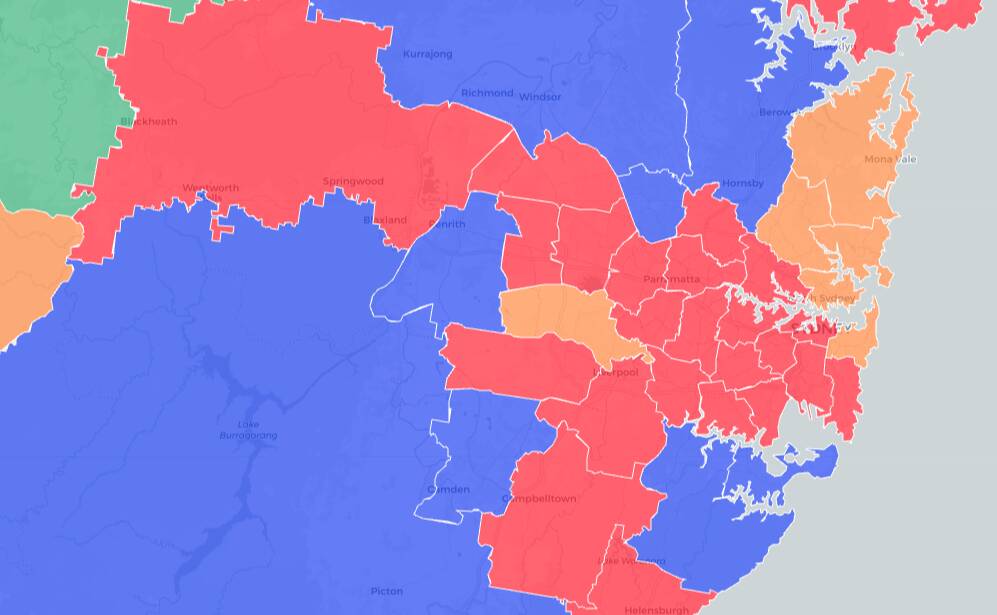
According to reporting in the Sydney Morning Herald today, and from other conversations with journalists, it sounds like the federal Labor government is on the verge of announcing a plan to expand the size of the parliament prior to the 2028 federal election.
Such a decision is to be welcomed, and I have been strongly advocating for this for a while. You can read all my posts on this topic here.
In my submission last year, I made a modest recommendation that the Parliament should be expanded to 14 senators per state. That seems to be where Labor is likely to go, based on today’s reporting.
But since I wrote that submission, I have come around to the idea that if we’re going to expand the Parliament, we should go bigger, with at least 16 senators per state.
In particular, Travis Jordan’s paper for the Electoral Regulation Research Network laid out the scale of under-representation.
Expanding the parliament is a very rare occurence. The first expansion took place 48 years after the federal parliament was established. The second took place 35 years later. If this expansion kicks in at the 2028 federal election, it will have been 44 years.
If expansions happen only once every 40 years, we may not see another expansion until around 2070. I will be in my eighties by then.
It is a rare moment when a government recognises the need to have a parliamentary expansion. There is a lot pushing back on it, both populist opposition to more politicians, but also politicians who see that a larger parliament is likely harder for political leaders to control. I doubt we will see another expansion soon.
It is also a large exercise to redraw the electoral map for the five mainland states.
The 1949 expansion increased the number of senators per state from 6 to 10 – a 67% increase. The 1984 expansion was a 20% increase. If we were to bump up the size of the parliament by two senators per state, that would be an increase of 16.7%. An increase of four senators would be about 33%.
I expect there will be some pushback from a parliamentary expansion, but I doubt it will make much difference as to whether that expansion is for 14 senators or 16. But I think it will make a big difference to improving representation.
An expansion from 12 to 14 senators would likely increase the number of seats in the House from 150 to 175. An expansion to 16 senators would bump up the House to about 200.
So I am calling on the government to raise its ambitions, and put forward legislation to elect at least 16 senators per state.

At that rate Tasmania will be like surf city? “Two girls for every senator”. It will set off a rental boom in Tasmania looking for electorate offices?
I am curious how many seats for WA – do you propose?
@WAfan98, I’ve added a table showing the number of seats per state under the 14-senator or 16-senator model.
On current population numbers, WA would increase to 19 or 22 seats.
@Roger, at a certain point we just need to do what works best for most of the country, even if Tasmania gets more seats than makes sense.
Despite reasonable arguments for a 16 seat model, it would seem to be politically unpalatable and could sink the whole exercise with the result that we would be stuck with a 12 senator model for much longer.
Referring over to Bludgertrack on the Pollbludger, the Liberals would currently be the big winner from a 14 seat model as on present polling they would not win more than 1 seat in NSW, Vic, Qld or SA but they would win two on a 14 seat model.
If they want to do it this term, they’d better get on with it to allow time for the redistribution processes that would be required in five states (plus the ACT if they went to 16 senators).
And preferably before the much-delayed Queensland redistribution kicks off in June. Otherwise it will start and then need to be abandoned and re-started.
Judging by the media flurry in the last few days, I do think that is the plan.
Another thought on the transition: To populate the extra Senate seats immediately, I assume they would do as in 1984 and actually elect 8 Senators (to get to 14) or 10 (to get to 16).
The way it was done in 1984 (to elect seven Senators per state) was that there was a count based on six vacancies, with the winners getting full terms, and then a further count based on seven vacancies to elect someone for a half-term. (With the proviso that the original six were safe even if they missed out due to the new quota changing the elimination order, and it was the first new person elected who got the seventh seat).
Also, the extra seats were filled immediately after the election without waiting for the normal turnover of the Senate, which wasn’t due until July 1985. The first two Senators elected in each state who were not already serving took their seats immediately, which could lead to some quirky results depending on which parties have retiring Senators. For instance in NSW, the Coalition won 3/6 seats (and 3/7) but two of their Senators (elected 2nd and 4th) took office on 1 Dec 1984 because the Labor Senators elected 1st and 3rd were already in the Senate. The Coalition therefore had 6/12 for NSW for seven months despite only winning 2/5, 2/5, 3/6 (or 3/7) at the three relevant elections.
The Liberals will oppose the expansion of Parliament but the Nationals are open to supporting it. I don’t think Angus Taylor will allow the Nationals to vote differently to the Liberals this time, considering the last time the Nationals voted differently to the Liberals (although only in the Senate) resulted in the second Coalition split this term and the downfall of his predecessor as Liberal leader Sussan Ley, unless he allows a conscience vote in the Coalition party room. Would be interesting to see how the Liberal and Nationals parties would vote on the proposed expansion of Parliament. I guess that Nationals frontbenchers (including Ross Cadell who suggested he’s open to it) would be forced to oppose the proposed expansion due to Shadow Cabinet solidarity, although some Nationals backbenchers may cross the floor to support it.
Albanese has all but ruled out legislating an expansion of Parliament during this term of Parliament (or probably during his Prime Ministership), saying he’s “satisfied with the current number of seats in the House of Representatives”. Opposition Leader Angus Taylor launched a Voice to parliament-style campaign against the proposal following pressure from the Coalition backbench, accusing the govt of having the wrong priorities of focusing on adding more politicians to federal parliament rather than the cost of living, which is very similar messaging to the Coalition’s anti-Voice campaign. The Coalition’s campaign against the proposed expansion of Parliament is purely to score political advantage. Albanese ruled out legislating an expansion of Parliament this term because he do not want another Voice to parliament-style negative campaign duing a fuel crisis and a cost of living crisis, which he knows he could not defend his party against, which will distract from the measures his govt is taking to tackle the crises and further damage his popularity and Labor’s votes.
But ultimately, the Parliament has to be expanded because leaving the Australian people increasingly underrepresented and leaving MPs handle the load of representing more and more people is not sustainable. Labor can pass the enabling legislation in Parliament with the support of the Greens and independents. We just need a PM who is brave enough to get this done in the face of attacks from the Opposition.
https://www.smh.com.au/politics/federal/not-what-we-need-taylor-comes-out-swinging-against-albanese-plan-for-more-politicians-20260331-p5zk7p.html